
Most Line Extensions Weaken Brands. Tabasco Shows How They Can Grow a Category.
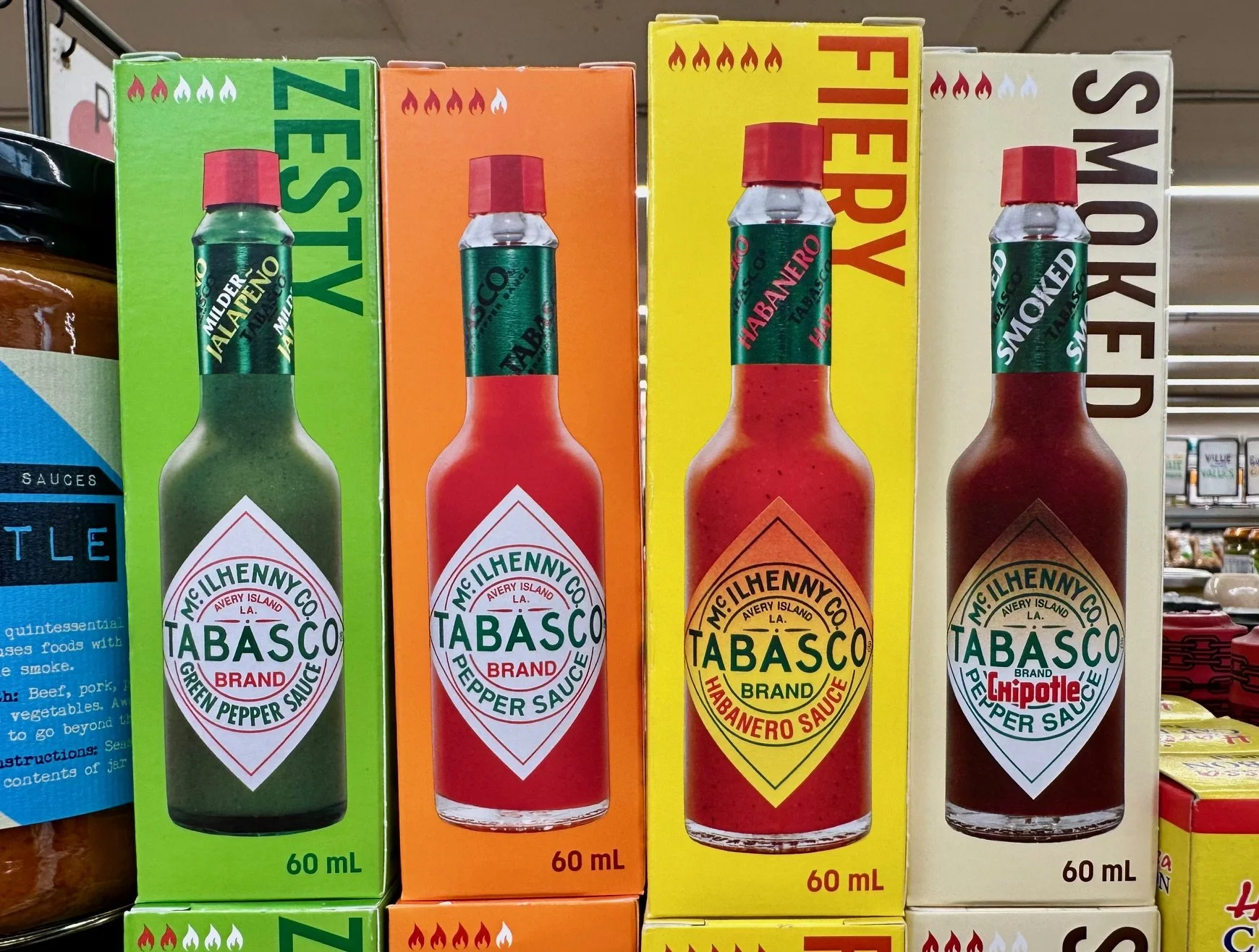
I grew up with Tabasco as a little bottle of fire that only the brave used. No surprise it’s one of the oldest brands on the condiment shelf, yet it’s still one of the most relevant.
Hot sauce used to sit on the fringe as a sharp dash of heat you added occasionally. Mince, oysters, and for me, a Bloody Mary. Then pop culture discovered hot sauce, right alongside all of us embracing new spicy cuisines.
What seems to have changed is how often people use it now. Heat has moved from a niche preference to an everyday flavour. I see it on menus when I’m out, when I cook at home, and definitely on supermarket shelves.
Somewhere along the way Tabasco helped the category grow up, and it did it through line extensions done properly.
Almost everyone knows the iconic Tabasco glass bottle, filled with red heat. Instead of fiddling with that core, Tabasco built a flavour ladder around it. Each variant doesn’t just add another SKU, it stretches the category into a slightly different eating occasion.
Jalapeño opens the door with a milder, greener heat. Chipotle brings smoke and depth, pulling hot sauce into barbecue territory. Habanero pushes the other way, towards fruitier heat and more adventurous flavour.
None of them replace the original. They simply expand what hot sauce can be.
Different flavours open up more occasions, more frequency, more reasons to keep it in the house. Over time, that lifts the value of the whole category.
When a category only offers one experience, usage stays narrow. We either like it or we don’t. But once flavour, heat levels and styles appear, behaviour changes. People experiment, keep multiple bottles in the cupboard and reach for heat with different meals.
That’s my takeaway here, the bit many line extensions miss.
The goal of good line extensions isn’t to spread the same sales across more SKUs. It’s to bring new occasions, new users and higher frequency into the category. That’s when a range stops competing with itself and starts organising the category for the shopper.
And you can literally see that ladder effect in the photo from my local store: the original anchoring the block, with the variants doing the work of guiding you up and across by flavour and heat.
A few simple line extension principles stand out, from looking at this range on shelf:
Protect the icon. Don’t mess with what people already trust, the iconic glass bottle.
Give each extension a clear role. A distinct flavour, heat level or usage occasion so it earns its place rather than duplicating the original.
Win on shelf clarity. Clear colour, clear flavour cue, clear heat cue so shoppers can navigate the range in seconds.
Build for repeat, not just trial. The extension should solve a meal moment people return to regularly, not just create curiosity.
Prove it’s incremental. Look for households buying two bottles and using heat more often, not simply switching from one variant to another.
Innovation doesn’t always mean creating something new. Sometimes it means expanding how a category fits into everyday life.
Curious where others have seen line extensions genuinely grow a category rather than dilute a brand.
